Walk into a silent field on the side of Dexter and the first thing you see is your shoulders going down. The air holds a mix of clean hay, natural leather, and the soft dust that climbs when unguis murmur across sand. Steeds take a breath slower than we do. They blink more frequently. They meet you with a visibility that really feels truthful. For individuals dealing with anxiety, that steadying presence can become a compass.
This isn't magic and it isn't a workaround for treatment that belongs in a clinician's office. It is a sensible, body-first way to allow the nervous system downshift. Via restorative horsemanship and equine-assisted solutions, individuals learn to read and regulate their very own signals, not via talks or worksheets, but with real-time comments from a pet that has survived for millennia by noticing what is secure and what is not. Dexter's blend of open fields, seasonal rhythms, and a tight-knit steed neighborhood makes it a dreamland to discover that steadier gait.
The quiet knowledge of horses
Horses are victim animals and social pets. That mix shows them to track the environment like a radar while staying connected to their herd. They communicate via small changes: a swish of tail, a softening of the eye, a lick and chew after tension launches. They mirror, sometimes intensify, the psychological tone around them.
In human terms, this implies you get a partner that addresses your nerves, not your words. If you hold your breath and square your shoulders, a horse might pause or step away. When you reduce your exhale and soften your emphasis, the equine may tip towards you, curious. In a restorative setting, we make use of that biofeedback to exercise regulation in the moment. With time, your body discovers what calmness feels like, not as a concept, however as a lived sensation.
Why equines aid in nervous states
Anxiety frequently traps individuals in loops of overthinking, superficial breathing, and muscular tissue supporting. Reviewing a pamphlet on coping skills seldom alters that, because the body does not learn by reading. It discovers by doing and picking up. Equine-assisted tasks give the nerve system something concrete to address: the rhythm of brushing, the feeling of a lead rope, the heat of a muzzle in your palm.
The barn environment also adds context that matters. Arena job brings sufficient uniqueness to push the nerves right into moderate activation, which is where development occurs. Yet it remains bounded by clear rules and physical safety and security. You are not confronting a classroom or a boardroom below, you are standing with a 1,000-pound companion that will certainly not make believe. He will certainly respond to your timing, clearness, and consistency. That truth encourages accountable risk taking, which constructs confidence.
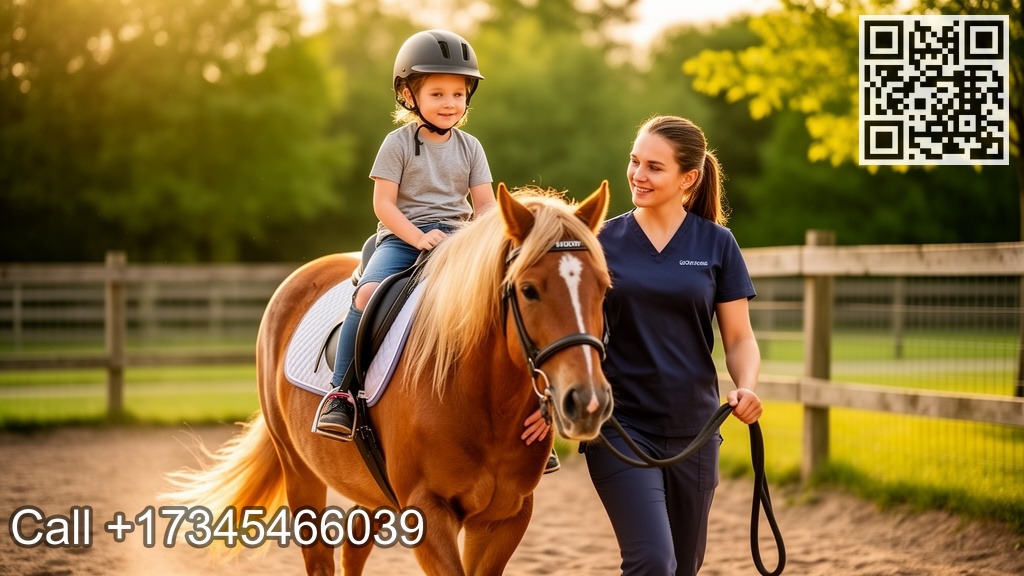
What a session in Dexter can look like
Most anxiousness support with equines in Dexter unravels in a series that respects both horse and human. A new client could start in a silent paddock, often even outside the fencing, just observing. Breath job isn't introduced as a technique. It emerges naturally when the professional asks, Would certainly you agree to match the equine's breathing for 3 cycles and see what modifications?
From there, we could move into pet grooming, because it provides rep without stress. Many customers report that the initial full-body brush takes 10 to 15 mins and ends with both steed and human visibly quieter. Leading workouts generally comply with. The client practices requesting for a quit and a select tiny signals, then finds out to change when the steed no longer adheres to those signals. That inequality becomes the material for mentoring: What did your body do right before he drifted off the rail? When you took a bigger action, exactly how did he answer?
Mounted job, if it occurs whatsoever, comes later and only when it includes worth. Some individuals never ever ride and still satisfy their objectives. For others, the gentle sway of a walk - roughly 90 to 110 steps per minute - brings a shaking activity that can resolve over active systems, similar to the means babies soothe with rhythm. Each choice is tailored, not formulaic.
Sessions run 50 to 75 mins, with the initial few mins invested in a check-in and the last few mins on debrief and grounding. The pacing stays slow-moving for a factor. Several distressed customers can push via fast, but the point here is to feeling and respond, not to conquer.
Safety, consent, and good horsemanship
An honest program locations steed welfare and human safety at the core. That means the horses utilized in equine-assisted solutions rotate schedules to stop exhaustion, get regular vet and unguis treatment, and obtain downtime outdoors. It additionally indicates saying no when problems aren't right. High winds, icy footing, or a steed who awakened tight can transform a session right into a safety danger. In Dexter, winter commonly asks us to pivot inside, right into a protected sector, or to concentrate on groundwork that does not require speed.
Consent runs both directions. Individuals have the right to pull out of any kind of workout, to go back from touch, to say, I would love to see today. Horses also provide permission. A practitioner tracks ears, eyes, and posture, and will readjust if an equine shows a head toss or a tight jaw. An eager partner discovers better than a supported one, whether the student is you or the gelding at the end of the rope.
Approaches we make use of, and why they differ
Equine-assisted services is an umbrella. Various approaches rest under it, each with its own focus.
In healing horsemanship, the abilities of risk-free handling and riding are instructed with an eye toward healing goals. You might learn to capture, halter, lead, bridegroom, and, when suitable, trip at the stroll and trot. Stress and anxiety job take advantage of this because the abilities demand tranquil clarity, and progression ends up being noticeable in little steps.
Equine-assisted training fixate goals for daily life. A training session may utilize tasks like browsing a ground post puzzle or relocating an equine via a pattern without a lead rope. The job exposes exactly how you establish boundaries, deal with stress, and request aid. It fits grownups that want practical adjustment at work or home and pairs well with equine-facilitated coaching in groups.
Equine-facilitated wellness ties noticing and movement to whole-person health. Professionals may cue micro-movements, like observing the weight of your feet or the feeling of your ribs, while observing the steed's action. This is where somatic healing with steeds lives. Stress and anxiety frequently reduces when individuals find out to call feelings and let them move, not subdue them.
Equine-assisted tasks cover a bigger variety, including unmounted programs for schools, precursors, or families. These provide easily accessible entrance factors for those uncertain concerning horses. Team building with horses often falls below, using collaborative jobs to boost communication under pressure.
None of these designs claim to cure anxiousness. They aid people construct regulation abilities, confidence, and relational clarity, which then support work finished with specialists, physicians, and households. The trick is a great match in between person, steed, and approach.
Stories from the arena
Names and a couple of information altered for personal privacy, but the shape of these experiences remains true.
An university student from Dexter showed up jittery, speaking quick, eyes on the ground. Her first session finished with one hand resting on a mare's shoulder for three complete breaths, which felt like a win. Over 5 weeks she found out to go back and reset when the mare pinned her ears during grooming. By week 8 she could ask for a crisp halt and hold it for a peaceful count of 5. At the end of the semester she stated, I can feel the minute prior to my panic spikes. That offers me choices.
A dad in his fifties came in for tension administration. His job called for hard due dates and little sleep. In the field, he often tended to over-cue. The gelding responded by speeding up, after that adjusting him out. We exercised smaller asks and waiting two secs before repeating any kind of sign. He disliked the waiting in the beginning. By the fourth session he chuckled, saying, Turns out I rush whatever. The week he used the very same two-second policy in a tense team meeting, he really felt the difference.
A center schooler with sensory challenges could not stand the curry comb's sound on dry hair. We swapped tools, reduced the rhythm, and functioned from three feet away with a long-handled brush. In time he moved closer. He learned to name the squeak as a sound, not a hazard, and to step out for a water break prior to overload. Different treatment for sensory difficulties functions best when it honors each sense honestly, not by pushing through.
For children and teens: ADHD and autism supports
Children and teenagers with interest differences usually thrive in motion. ADHD equine discovering support harnesses that require for movement without shaming it. Ask a 10-year-old to rest still and memorize a listing of actions, and you shed him. Welcome him to lead a pony with 4 cones in a pattern, and you engage his body and brain together. After that you can name the executive function abilities he made use of: planning, sequencing, impulse control. The pony's feedback provides instant comments without judgment.
An autism equine learning program leans right into predictability and clear signals. Many neurodivergent pupils attach highly with horses when regimens are stable and shifts are gradual. A session may start by evaluating an aesthetic timetable, after that supplying choices: halter the equine with a blue or green lead, brush with soft or moderate brush, stroll the figure or the straight line first. Those little selections develop agency. Social finding out takes place side-by-side, not face to face, which lowers pressure. With time, pupils practice turn taking, point of view taking, and adaptable thinking, all with the equine's constant visibility as a co-teacher.
Parents often ask just how frequently to schedule. For youngsters and teenagers, once regular benefit a lot of, often twice regular during institution breaks. Shorter bouts, 45 to 60 mins, defeat marathons. And breaks issue. A week off for a family members trip does not remove gains. The skills stay in the body and return quick when sessions resume.
For grownups: stress and anxiety, fatigue, and leadership
Adults carry layered tension: work, caregiving, funds, aging moms and dads. Stress and anxiety develops not only from worry, yet from chronic overload. Equine-assisted mentoring creates a lab for management and limit work. If you are a manager that struggles to hand over, attempt asking a steed to cross a tarp without pulling. It requires you to keep your feet grown while your ask trips plainly down the line. If your default is to appease, exercise claiming no by establishing a tough quit at a cone and maintaining it. The steed won't resent. He will merely test, then regard consistency.
Team building with steeds takes this degree up. A small team may be tasked with moving two steeds with a program using only body position and signals, no ropes. Inevitably, somebody talks excessive, a person hangs back, and someone attempts to do all of it. Fifteen minutes of organized reflection later can move dynamics back at the workplace in a way that a slide deck can not. Individuals keep in mind exactly how it really felt to step up or tip apart since the horses addressed them in genuine time.
For solo specialists and caregivers, equine-facilitated wellness provides a refuge. The body maintains score of lengthy periods of providing. Grounding with a peaceful mare, tracking her breath, observing your feet, and resetting your pace develops a tank you can draw from later. Customers frequently state they sleep better the evening after a session. That tiny win matters.
Getting started in Dexter: what to anticipate on your very first visit
- A short intake discussion in the office or barn aisle, covering objectives, background with pets, and any type of clinical or movement considerations A safety and security positioning, consisting of how to walk around equines, where to stand, and what signals to enjoy for A fulfill and greet with a couple of equines that fit your personality and requires, commonly over a fence first A low-demand activity such as grooming or leading at the walk, paced to your comfort A short debrief with practical takeaways you can apply in between sessions
Wear closed-toe footwear with a level sole, layers for Michigan's unpredictable weather, and handwear covers if your hands are sensitive to texture. Procedure run in light rainfall and mild snow, but ice or storms might motivate indoor work or a reschedule.
A basic at-home technique borrowed from the barn
- Stand with your feet hip-width, knees soft, and envision holding a lead rope with just adequate tone to maintain a gentle curve Inhale through your nose for a count of 4, exhale with pursed lips for a matter of 6, and repeat 3 times Name five feelings you feel now, from the weight of your feet to the temperature on your cheeks Ask yourself, What is the smallest next step I can take with clarity, not force, and afterwards take it
This mini-sequence simulates what operate in the arena: tone without tension, longer exhale, sensory naming, after that one clear ask. Exercise daily for two weeks and track what shifts.
Weather, period, and the feeling of location in Dexter
The seasons shape barn life around Dexter. Spring mud brings persistence and boot scrapes at every door. Horses lost winter coats by the handful, and grooming comes to be a meditation in change. Summer season mornings offer silent light and fewer flies, so earlier sessions frequently fit people susceptible to sensory overwhelm. Fall smells like apples and fresh shavings, and anxiety often tends to reduce when regimens resolve after the beginning of institution. Winter can be the most peaceful time of all. The world muffles under snow, and the interior field holds a cocoon of stable rhythm.
We strategy around conditions. On high-humidity days, sessions might stay unmounted with more breaks. When cold snaps make steel tack awkward, groundwork and freedom play take center stage. Stress and anxiety does not clock out for climate, however we can adjust so your body discovers versatility without losing safety.
How progress is gauged without transforming everything into homework
Not every little thing that matters can be graphed, but clarity assists. We track three sort of indicators.
First, physiological: lower resting heart price by the end of a session contrasted to the begin, breath that normally extends, shoulders that go down, a jaw that unclenches. These signs show up on your face and in your stance, and your professional aids you see them.
Second, functional: you can lead an equine on a loose line at a walk, quit and begin with subtle signs, keep a boundary without yanking, and return to soothe after a startle. Each of those abilities mirrors a daily-life capacity.
Third, subjective: you report fewer panic spikes weekly, or when they happen you recover in 5 minutes as opposed to thirty. Sleep enhances in the 24 hours post-session. You really feel extra able to state no. We might jot these down every couple of weeks to mark arcs of modification, not to judge.
Frequency matters, however there is no solitary right number. Many people begin weekly for 6 to 10 sessions, after that taper. Some return seasonally for a reset. We review objectives and adjust. If you really feel stuck for 2 or 3 sessions, we alter the method or the horse.
When equine work is not the right fit
Part of ethical practice is calling limits. If you have extreme hatreds horses or hay, this may not be comfortable or safe. If you remain in energetic dilemma or detoxification, a scientific setup belongs first. If you lug injury that flares right into dissociation with touch or activity, you can still work with equines, however just with a trauma-informed specialist and clear medical assistance. If you desire quick repairs, the barn will certainly frustrate you. Equines show in loops and spirals. Development appears like two steps forward, a time out, after that one more step.
Sometimes a mismatch with a particular horse masks a deeper problem. If you feel evaluated by a horse's rejection, you might press more difficult to show something. That push welcomes us to reduce and reframe. If reducing feels excruciating, that is information we can repossess to your talk therapist.
How equine experiences enhance various other supports
Many customers pair equine-assisted activities with therapy or medication. The barn comes to be the laboratory, the office the place to evaluate what occurred. A cognitive therapist might help you reframe an anxiety, then the steed offers you a location to test that brand-new framework against your body's responses. A psychiatrist may adjust a medicine, after that report that the somatic devices you discover with the equines make reduced doses possible. Clear interaction amongst providers assists. With your consent, specialists can share general themes and objectives so every person rows in the same direction.
Families benefit too. Moms and dads that watch their child discover a stop-and-go sign commonly take on comparable language at home. Couples often schedule a joint session to practice borders with a neutral 3rd party who happens to https://beaudjgf681.yousher.com/adhd-strengths-in-the-saddle-equine-discovering-assistance-that-sticks put on unguis. The horse reflects the unit, not just the individual, that makes systems visible without blame.
The role of choice and voice
Anxiety usually grows at night when people feel caught. The barn turns that manuscript by offering choices every which way. Will you work with the bay or the chestnut today? Intend to start with brushing or walking? Would certainly you like me on your left or your right? These micro-choices restore firm. With time, clients start articulating choices quicker outdoors sessions. They request a quieter table at a restaurant. They ask for a pause in a meeting. They determine which commitments can go down without the globe ending.
Horses award clarity. If you ask with your entire body, they address. If you half-ask, they hesitate. That lesson lands kindly from a gelding that snaps an ear and awaits you to attempt again.
Dexter's neighborhood and the lengthy view
One stamina of Dexter is the web of neighbors who recognize where the excellent hay comes from, which veterinarian gets on telephone call, and just how to repair a surround a pinch. That grounded, useful society seeps right into the barn. We speak clearly. We laugh when an intrusive mare unzips a coat pocket. We commemorate silent wins, like a teenager that makes eye contact with an equine for two seconds longer than last week.
Long-term, several customers return to the barn as volunteers or take part in experiential knowing with horses past anxiety support. Some join group centers focused on equine-facilitated training. Others register for weekend break workshops on interaction or sorrow. The skills transfer. An individual that discovered to lead a 1,100-pound draft cross without yanking can usually hold their very own in a difficult conversation without increasing their voice.
Finding your path to peace
Anxiety tells you to reduce your world to avoid pain. Horses invite you to expand it securely. The sector offers you a specified area, a living mirror, and the grace to attempt once more. With each browse through, you pile little success. Your breath evens. Your shoulders soften. Your asks get cleaner. You notice earlier when your system increases, and you bring it down without drama.
Whether you pick healing horsemanship to build concrete skills, equine-assisted mentoring to make improvements leadership, or equine-facilitated health to deepen body recognition, the through line remains easy: your nerves finds out by doing. In Dexter, among steeds that recognize the language of herd and home, there is space to exercise up until ease feels acquainted. Anxiousness might still knock. Now you have a halter, a lead, and a method to satisfy it with steadier hands.